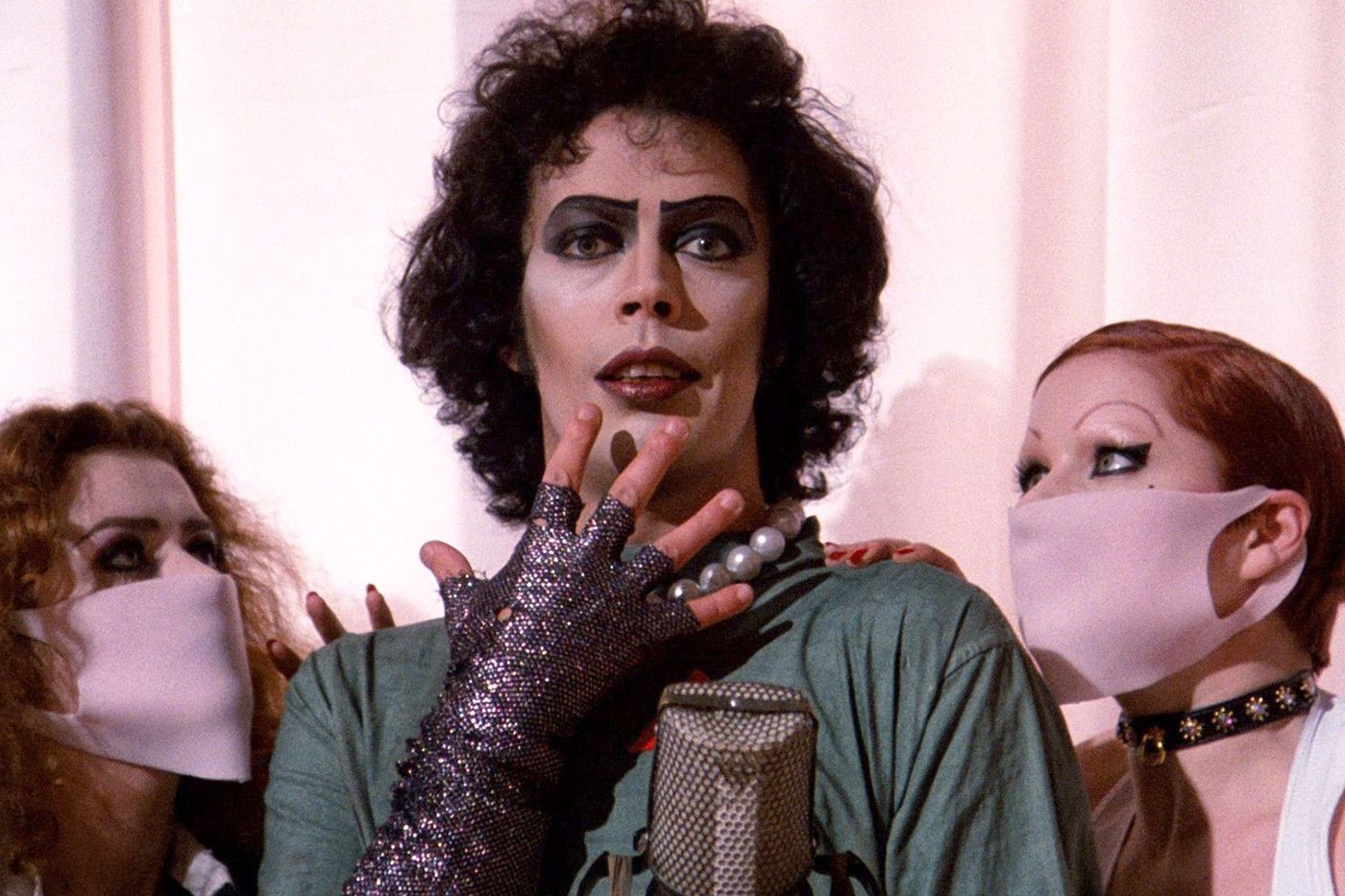


We Asked A.I. to Create the Joker. It Generated a Copyrighted Image.::Artists and researchers are exposing copyrighted material hidden within A.I. tools, raising fresh legal questions.
Copyright issues aside, can we talk about how this implies accurate recall of an image from a never before achievable data compression ratio? If these models can actually recall the images they have been fed this could be a quantum leap in compression technology.
Holy shit I didn’t even think about that.
Essentially the model is compressing the image into a prompt.
Instead of the bitmap being 8MB being condensed down into whatever the jpeg equivalent is, it’s still more than a text file with that exact prompt that gave.
But it’s not deterministic.
It’s just a little bit lossy
I mean, that randomness is just faked. Keep a consistent seed and you’ll get consistent results.
deleted by creator
If you ignore the fact that the generated images are not accurate, maybe.
They are very similar so they are infringing but nobody would use this method for compression over an image codec
You can hardly consider it compression when you need a compute expensive model with hundreds of gigabytes (if not bigger) to accurately rehydrate it
You can hardly consider it compression when you need a compute expensive model with hundreds of gigabytes (if not bigger) to accurately rehydrate it
You can run Stable Diffusion with custom models, variational auto encoders, LoRAs, etc, on an iPhone from 2018. I don’t know what the NYTimes used, but AI image generation is surprisingly cheap once the hard work of creating the models is done. Most SD1.5 model checkpoints are around 2GB in size.
Edit: But yes, the idea of using this as image compression is absurd.
It’s not as accurate as you’d like it to be. Some issues are:
- It’s quite lossy.
- It’ll do better on images containing common objects vs rare or even novel objects.
- You won’t know how much the result deviates from the original if all you’re given is the prompt/conditioning vector and what model to use it on.
- You cannot easily “compress” new images, instead you would have to either finetune the model (at which point you’d also mess with everyone else’s decompression) or do an adversarial attack onto the compression model with another model to find the prompt/conditioning vector most likely to create the original image you have.
- It’s rather slow.
Also it’s not all that novel. People have been doing this with (variational) autoencoders (another class of generative model). This also doesn’t have the flaw that you have no easy way to compress new images since an autoencoder is a trained encoder/decoder pair. It’s also quite a bit faster than diffusion models when it comes to decoding, but often with a greater decrease in quality.
Most widespread diffusion models even use an autoencoder adjacent architecture to “compress” the input. The actual diffusion model then works in that “compressed data space” called latent space. The generated images are then decompressed before shown to users. Last time I checked that compression rate was at around 1/4 to 1/8, but it’s been a while, so don’t quote me on this number.
I mean, only if you have the entire model downloaded and your computer does a ton of work to figure it out. And then if any new images are created the model will have to be retrained. Maybe if there were a bunch of presets of colors to choose from that everyone had downloaded and then you only send data describing changes to the image
I was thinking about this back when they first started talking about news articles coming back word for word.
There’s no way for us to tell how much of the original data even in a lossy fashion can be directly recovered. If this was as common as these articles would leave you to believe you just be able to pull anything you wanted out on demand.
But here we have every news agency vying to make headlines about copyright infringement and we’re seeing an article here and there with a close or relatively close result
There are millions and millions of people using this technology and most of us aren’t running across blatant full screen reproductions of stuff.
You can tell from some of the artifacts that they’ve trained from some watermark images because the watermarks kind of show up but for the most part you wouldn’t know who made the watermarking if all the watermarking companies didn’t use rather unique patterns.
The image that we’re seeing on this news site of the joker is quite exceptional, even from a lossy standpoint, but honestly it’s just feeding the confirmation bias.
“how much of the data is the original data”?
Even if you could reverse the process perfectly, what you would prove is that something fed into the AI was identical to a copyrighted image. But the image’s license isn’t part of that data. The question is: did the license cover use as training data?
In the case of watermarked images, the answer is clearly no, so then the AI companies have to argue that only tiny parts of any given image come from any given source image, so it still doesn’t violate the license. That’s pretty questionable when waternarks are visible.
In these examples, it’s clear that all parts of the image come directly or indirectly (perhaps some source images were memes based on the original) from the original, so there goes the second line of defence.
The fact that the quality is poor is neither here nor there. You can’t run an image through a filter that adds noise and then say it’s no longer copyrighted.
The trained model is a work derived from masses of copywrite material. Distribution of that model is infringement, same as distributing copies of movies. Public access to that model is infringement, just as a public screening of a movie is.
People keep thinking it’s “the picture the AI drew” that’s the issue. They’re wrong. It’s the “AI” itself.
Compression is actually a mathematical field that’s fairly well explored, and this isn’t compression. There are theoretical limits on how much you can compress data, so the data is always somewhere, either in the dictionary or the input. Trained models like these are gigantic, so even if it was perfect recall the ratio still wouldn’t be good. Lossy “compression” is another issue entirely, more of an engineering problem of determining how much data you can throw out while making acceptable compromises.
Chat GPT it’s over 500 gigs of training data plus over 300 gigs of RAM, and Sam Altman has been quite adamant about how another order of magnitude worth of storage capacity is needed in order to advance the tech.
I’m not convinced that these are compressed much at all. I would bet this image in its entirety is actually stored in there someplace albeit in an exploded format.
I made a novel type of language model, and from my calculations after about 30gb it would cross over an event horizon of compression, where it would hold infinitely more pieces of text without getting bigger. With lower vocabulary it would do this at a lower size. For images it’s still pretty lossy but it’s pretty cool. Honestly I can’t mental image much better without drawing it out.
Hmm this sounds like a similar technology to the time cube
God I fucking hate this braindesd AI boogeyman nonsense.
Yeah, no shit you ask the AI to create a picture of a specific actor from a specific movie, its going yo look like a still from that movie.
Or if you ask it to create “an animated sponge wearing pants” it’s going to give you spongebob.
You should think of these AIs as if you asking an artist freind of yours to draw a picture for you. So if you say “draw an Italian video games chsracter” then obviously they’re going to draw Mario.
And also I want to point out they interview some professor of English for some reason, but they never interview, say, a professor of computer science and AI, because they don’t want people that actually know what they’re talking about giving logical answers, they want random bloggers making dumb tests and “”“exposing”“” AI and how it steals everything!!!1!!! Because that’s what gets clicks.
We asked this artist to draw the joker. The artist generated an copyrighted image. We ask the court to immediately confiscate his brain.
All of this and also fuck copyright.
Why does everyone suddenly care about copyright so much. I feel like I’m taking crazy pills.
It’s actually pretty concerning. A lot of the anti-AI arguments are really short-sighted. People want to make styles copyrightable. Could you imagine if Disney was allowed to claim ownership over anything that even kinda looked like their work?
I feel like the protectionism of the artist community is a potential poison pill. That in the fight to protect themselves from corporations, they’re going to be motivated to expand copyright law, which ultimately gives more power to corporations.
If you copy work without giving credit to it’s source then you’re the asshole, the rules shouldn’t be any different for AI.
If you ask your friend to draw something with a vague prompt then I like to think you’ll get something original more often than not, which is what the article discusses in depth: the AI will return copyrighted characters almost every time.
The rules aren’t any different for AI. AI is not a legal entity, just like a pen and canvas are not. It is always about the person who makes money with facsimiles of copyrighted previous work.
So then the people operating this AI and offering paid services are legally in the wrong and should be taken down or pay reparations to everyone they’ve stolen from.
So do you want to shutdown Google because I can type “spongebob squarepants” into Google images and Google with give me an image of spongebob?
Please put some thought into the implications of what you’re saying outside of AI before you make a knee-jerk reaction like that.
Those images in the search results are one of three categories:
-
Officially licensed and distributed works that Spongebob IP owners signed off on
-
Fair use works, namely noncommercial and parody
-
Illegal works the posters of which can be sued
Google themselves didn’t create those images. Google didn’t intentionally profit off of illegal works without giving credit. Google didn’t post those images themselves. AI did all of those things.
It doesn’t matter if Google creates the images.
It doesn’t matter if they “intend” to profit from illegal works.
It doesn’t matter if they “give credit” (this is the one that’s the dumbest because it just reeks of ignorance, like thinking you can use whatever works you like as long as you put a credit to them in the description)
Google showing you copywritten images when you search for them is not different than when an AI does it.
It does actually matter if Google creates the images and then sells them directly. That is what this discussion is about. If you don’t want to be a part of the discussion, fuck off then.
-
Again, that makes as much sense as holding Staedtler responsible because someone used their pencils to duplicate a copyrighted work.
If Staedtler sampled copywritten works to create pencils that automatically steal it without attribution on demand, then yes it would be exactly like that.
We asked A.I. to create a copyrighted image from the Joker movie. It generated a copyrighted image as expected.
Ftfy
When they asked for an Italian video game character it returned something with unmistakable resemblance to Mario with other Nintendo property like Luigi, Toad etc. … so you don’t even have to ask for a “screencapture” directly for it to use things that are clearly based on copyrighted characters.
you’re still asking for a character from a video game, which implies copyrighted material. write the same thing in google and take a look at the images. you get what you ask for.
you can’t, obviously, use any image of Mario for anything outside fair use, no matter if AI generated or you got it from the internet.
Also ask literally any human and they’ll probably name Mario first. Not just top 10, number 1.
But the AI didn’t credit the clear inspiration. That’s the problem, that is what makes it theft: you need permission to profit off of the works of others.
If you asked me to draw an Italian video game character, I’d draw Mario too. Why can’t an AI make copyrighted character inspired pics as long as they aren’t being sold?
You credited it just now as Mario, a Nintendo property, which the AI failed to do. Plus, if you were paid to draw Mario then you’d have broken laws about IP. Why don’t those same rules apply to AI?
Well that’s exactly the problem. If people use AI generated images for commercial purposes they may accidentally infringe on someone else’s copyright. Since AI models are a black box there isn’t really a good way to avoid this.
What it proves is that they are feeding entire movies into the training data. It is excellent evidence for when WB and Disney decides to sue the shit out of them.
Does it really have to be entire movies when theres a ton of promotional images and memes with similar images?
Yes. Thats what these things are, extremely large catalogues of data. As much data as possible is their goal.
True but it didn’t pick some random frame somewhere in the movie it chose a extremely memorable shot that is posted all over the place. I won’t deny that they are probably feeding it movies but this is not a sign of that.
This image is literally the top result on Google images for me.
Why would it pick some random frame in the middle of its data set instead of a frame it has the most to reference. It can still use all those other frames to then pick the frame if has the most references to.
But im starting to think maybe i misunderstood the comment i replied to.
Sorry, im way out of context with my reply, totally my fault for reflexively replying.
Uhhh would you accept i didnt have my coffee yet and hadnt got out of bed yet as an explanation?
Promotional images are still under copyright.
We should find all the memers and throw them in jail.
Will someone think of the shareholders!?
I think it’s much more likely whatever scraping they used to get the training data snatched a screenshot of the movie some random internet user posted somewhere. (To confirm, I typed “joaquin phoenix joker” into Google and this very image was very high up in the image results) And of course not only this one but many many more too.
Now I’m not saying scraping copyrighted material is morally right either, but I’d doubt they’d just feed an entire movie frame by frame (or randomly spaced screenshots from throughout a movie), especially because it would make generating good labels for each frame very difficult.
The way it was done if I remember correctly is that someone found out v6 was trained partially with Stockbase images-caption pairs, so they went to Stockbase and found some images and used those exact tags in the prompts.

WB and Disney would lose, at least without an amendment to copyright law. That in fact just happened in one court case. It was ruled that using a copyrighted work to train AI does not violate that works copyright.
Using it to train on is very different from distributing derived works.
What do you think the trained model is other than a derived work?
Something transformative from the original works. And arguably not being being distributed. The model producing and distributing derivative works is entirely different though. No one really gives a shit about data being used to train models - there’s nothing infringing about that which is exactly why they won their case. The example in the post is an entirely different situation though.
The image it generated is really widespread
I have that exact same .jpeg stored on my computer and I don’t even know where it came from. I don’t even watch superhero films
And if you tried to sell that, you would be breaking the law.
Which is what these AI models are doing
They’re not selling it though, they’re selling a machine with which you could commit copyright infringement. Like my PC, my HDD, my VCR…
No, they are selling you time in a digital room with a machine, and all of the things it spits out at you.
You dont own the program generating these images. You are buying these images and the time to tinker with the AI interface.
I’m not buying anything, most AI is free as in free beer and open source e.g. Stable Diffusion, Mistral…
Unlike hardware it’s actually accessible to everyone with sufficient know-how.
Youre pretty young, huh. When something on the internet from a big company is free, youre the product.
Youre bug and stress testing their hardware, and giving them free advertising. While using the cheapest, lowest quality version that exists, and only for as long as they need the free QA.
The real AI, and the actual quality outputs, cost money. And once they are confident in their server stability, the scraps youre picking over will get a price tag too.
Voyager just loaded a copyrighted image on my phone. Guess someone’s gonna have to sue them too.
Wow, voyager app is very nice!
Yeah man, Voyager is making millions with the images on the app. It makes me so mad, they Voyager people make you think they are generating content on their own, but in reality is just feeding you unlicensed content from others.
You’re completely missing the point. Making money doesn’t change the legality. YouTube was threatened by the RIAA before they even started showing ads. Displaying an image from a copyrighted work on an AI platform is not much different technologically than Voyager or even Google Images displaying the same image, and both could also be interpreted as “feeding you unlicensed content from others.”
Making money doesn’t change the legality.
Except that it actually does? That’s the point of copyright laws. The LLM/AIs are using copyright protected material as source without paying for it, and then selling it’s output as "original '.
Get rid of copyright law. It only benefits the biggest content owners and deprives the rest of us of our own culture.
It says so much that the person who created an image can be bared from making it.
No copyright law means whatever anyone comes up with can be massmanufactured cheaply by a big corp.
A. Confusing this with patents
B. They already can. Copyrights don’t protect individual artists they protect big corps.
this is some terminally online take
Personal attacks won’t change the argument. It just shows that you don’t have one.
“personal attack won’t change the fact that I have shit for brains and you don’t.”
you do you, mr. shit-for-brains
Sorry my bad I thought I blocked every Disney agent on this site. Don’t worry I will take care of that now.
Non-exclusively, so if something works everyone will make it and get a piece of the pie.
I see no problem.
Yeah, IMO trademarks are important and should be protected. And publishing full works should have royalties go to the original producer, and this is a case where I think for the lifetime of the artist is fair. Though I do think that the royalties should have a formula rather than being entirely determined by the original producer (to prevent the price from essentially making it not available), though an exclusivity period would be fair, though with a duration of maybe a year or two.
With trademarks, canon can be established, as can standards like “cartoons with the Disney logo won’t be porn”.
If someone wants to make a series where Luke Skywalker and Jean Luc Picard fly around the galaxy settling Star Wars vs Star Trek debates by explaining Muppets are better than both and then order Darth Vader to massacre everyone that disagrees and the Borg to assimilate the rest, it doesn’t harm the originals in any way. Unless it’s so much better than no one cares about the originals anymore, but that’s just the way competition works.
That’s patents
I can take any image you give me and make a stable diffusion model that makes only that image.
You are confusing bad conduct with bad technology.
Just like mowing down children is not the correct way to use a bus.
Sensationalism and the subsequent tech bro takes is actually unbearable if you just know how the technology works.
Stop pretending to know gen art if you just used one once and know IT! Please stop spreading misinformation just because you feel like you can guesstimate how it works!
The article uses Midjourney. Nobody is tuning it.
They said copyright infringement is hidden in AI tools, not that AI inherently infringes copyrights.
No. That the midjourney team uses copyrighted art
We already knew this
I took a gun, pointed it at another person, pulled the trigger and it killed that person.
I opened the egg carton and found eggs in there.
I built the dam
I broke the dam
Damn.
Wah fuckin Wah.
When they say “copyrighted by Warner bros” they actually mean “created by a costume designer, production designer, lighting designer, cinematographer, photographer or camera operator, makeup artist, hairdresser, and their respective crews who were contractually employed by Warner bros but get no claim to their work,” right?
deleted by creator
Well yeah, you don’t buy a car built by a list of every motherfucker in the factory, you buy a Toyota or a fucking ford.
I think AI in this case is doing exactly what it’s best at: Automating unbelievably boring chores on the basis of past “experiences”. In this case the boring chore was “Draw me [insert character name] just how I know him/her”.
Too many people mistakenly assume generative AI is originative or imaginative. It’s not. It certainly can seem that way because it can transform human ideas and words into a picture that has ideally never before existed and that notion is very powerful. But we have to accept that, until now, human creativity is unique to us, the humans. As far as I can tell, the authors were not trying to prove generative AI is unimaginative, they were showing just how blatant copyright infringement in the context of generative AI is happening. No more, no less.
Creativity can be estimated by AI with randomness, but what they don’t have is taste to determine which of their random ideas are any good.
I dunno man … assume a model trained on the complete corpus of arts leading up to the Renaissance. What kind of randomness lands you at Hieronymus Bosch? Would AI be able to come up with Gonzo Journalism or modal music?
A brief glance at the history of human ingenuity in the arts really puts generative AI in perspective.
Yea, it really boggles my mind that we now have a way to automate boring jobs like data entry of drafting some mundane documents but what humanity decides to use it for is artistic expression, the one thing it can’t really do properly. It’s like NFTs all over again…
What’s surprising, people want to create what they imagine, they don’t have the skills and/or time to draw/render it.
This is such a strange comment. The vast majority of AI use cases are LLM use cases. Generative Art is just a novelty. Most of the money and research right now is going towards the useful automation tasks, not the novelty. That people are abandoning one for the other is not a reasonable conclusion.
And NFTs were stupid for a completely different reason. Nobody is trying to sell me AI shit like it’s going to make me rich and special. And at least some NFTs had real artists behind them.
“Generate this copyrighted character”
“Look, it showed us a copyrighted character!”
Does everyone that writes for the NYTimes have a learning disability?
Or you do? The point is that these machines are just regurgitating the copyrighted data they are fed, and not actually doing all that transformative work their creators claim in order to legally defend feeding them work they dont have the rights to.
Its recreating the images it was fed. Not completing the prompt in unique and distinct ways. Just taking a thing it ate and plopping it into your hands.
It doesnt matter that you asked it to do that, because the whole point was that it “isnt supposed to” do that in order for them to have the legal protection of feeding it artwork they didnt pay the rights to.
I’m pretty pro AI but I think their point was that the generated images were near identical to existing images. For example, they generate one from Dune that even has whisps of hair in the same place.
They just didn’t use a clean model, this is actually so frustrating to read this many “experts” talk about stable diffusion… It’s really not hard to teach a model to draw a specific image. This is like running people over with a car going LOOK! It’s a killing machine!
The crux is that they went “draw me a cartoon mouse” and Midjourney went “here is Disney’s Mickey Mouse™”. A simple prompt should not be able to generate that specific of an image. If you want something specific, you should need to specific it, otherwise the AI failed to generalize or is somehow heavily biased towards existing images.
The point is to prove that copyrighted material has been used as training data. As a reference.
If a human being gets asked to draw the joker, gets a still from the film, then copies it to the best of their ability. They can’t sell that image. Technically speaking they’ve broken the law already by making a copy. Lots of fan art is illegal, it’s just not worth going after (unless you’re Disney or Nintendo).
As a subscription service that’s what AI is doing. Selling the output.
Held to the same standards as a human artist, this is illegal.
If AI is allowed to copy art under copyright, there’s no reason a human shouldn’t be allowed to do the same thing.
Proving the reference is all important.
If an AI or human only ever saw public domain artwork and was asked to draw the joker, they might come up with a similar character. But it would be their own creation. There are copyright cases that hinge on proving the reference material. (See Blurred Lines by Robin Thick)
The New York Times is proving that AI is referencing an image under copyright because it comes out precisely the same. There are no significant changes at all.
In fact even if you come up with a character with no references. If it’s identical to a pre-existing character the first creator gets to hold copyright on it.
This is undefendable.
Even if that AI is a black box we can’t see inside. That black box is definitely breaking the law. There’s just a different way of proving it when the black box is a brain and when the black box is an AI.
But that’s just a lie? You may draw from copyright material. Nobody can stop you from drawing anything. Thankfully.
Nobody can stop you.
But because our copyright laws are so overreaching you probably are breaching copyright.
It’s just not worth a company suing you for the financial “damages” they’ve “suffered” because you drew a character instead of buying a copy from them.
Certain exceptions exist, not least “De Minimus” and education.
You can argue that you’re learning to draw. Then put that drawing in a drawer and probably fine.
But’s pretty clear cut in law that putting it even on your own wall is a copyright breach if you could have bought it as a poster.
The world doesn’t work that way but suddenly AI doing what an individual does thousands of times, means thousands times the potential damage.
Just as if you loaded up a printing press.
De Minimus no longer applies and the actual laws will get tested in court.
Even though this isn’t like a press in that each image can be different, thousands of different images breaking copyright aren’t much different to printing thousands of the same image.
No that’s just not how the law is. Now it’s just two lies
Much like @Ross_audio, I have studied this intently for business reasons. They are absolutely right. This is not a transformative work. This is a direct copy of a trademarked and/or copyrighted character for the purpose of generating revenue. That’s simply not legal for the same reason that you can’t draw and sell your own Spider-Man comics about a teenager that gains the proportional strength and abilities of a spider, but you can sell your own Grasshopper-Man comics about a teenager that gains the proportional strength and abilities of a grasshopper. As long as you use your own designs and artwork. Because then it is transformative. And parody. Both are legal. What Midjourney is doing is neither transformative nor parody.
Tough question is, can a tool be infringing anything?
Although I’d see a legal case if AI companies were to bill picture by picture, but now they are just billing for a tool subscription.
Still, would Microsoft be liable for my copy-pastes if they charged a penny every time I use it, or am I, if I sell a art piece that uses that infringing image?
AI could be scraping that picture from anywhere.
They are showing that the author of the tool has comitted massive copyright infringement in the process construction of the tool.
…unless they licensed all the copyright works they trained the model on. (Hint: they didn’t, and we know they didn’t because the copyright holders haven’t licensed their work for that purpose. )
It doesn’t matter if a company charges or not for anything. It’s not a factor in copyright law.
Who created this image in your view then, who is liable?
Can a tool create? It generated.
Anyway, in case like this, is creation even a factor in liability?
In my opinion one who gets monetary value first from the piece should be liable.
NYTimes?
“I didnt kill him, officer, my murder robot did. Oh, sure, I built it and programmed it to stab jenkins to death for an hour. Oh, yes, I charged it, set it up in his house, and made sure all the programming was set. Ah, but your honor, I didnt press the on switch! Jenkins did, after I put a note on it that said ‘not an illegal murderbot’ next to the power button. So really, the murderbot killed him, and if you like maybe even jenkins did it! But me? No, sir, Im innocent!”
How is this example relevant? You created the programming.
And someone created the AI programming too.
Then someone trained that AI.
It didn’t just come out of the aether, there’s a manual on how to do it.
So by that logic. I prompted you with a question. Did I create your comment?
I used you as a tool to generate language. If it was a Pulitzer winning response could I gain the plaudits and profit, or should you?
If it then turned out it was plagiarism by yourself, should I get the credit for that?
Am I liable for what you say when I have had no input into the generation of your personality and thoughts?
The creation of that image required building a machine learning model.
It required training a machine learning model.
It required prompting that machine learning model.
All 3 are required steps to produce that image and all part of its creation.
The part copyright holders will focus on is the training.
Human beings are held liable if they see and then copy an image for monetary gain.
An AI has done exactly this.
It could be argued that the most responsible and controlled element of the process. The most liable. Is the input of training data.
Either the AI model is allowed to absorb the world and create work and be held liable under the same rules as a human artist. The AI is liable.
Or the AI model is assigned no responsibility itself but should never have been given copyrighted work without a license to reproduce it.
Either way the owners have a large chunk of liability.
If I ask a human artist to produce a picture of Donald Duck, they legally can’t, even though they might just break the law Disney could take them to court and win.
The same would be true of any business.
The same is true of an AI as either its own entity, or the property of a business.
I’m not non-sentient construct that creates stuff.
…and when the copyright law was written there was no non-sentient things gererating stuff.
There is literally no way to prove whether you’re sentient.
Decart found that limitation.
The only definition in law is whether you have competency to be responsible. The law assumes you do as an adult unless it’s proven you don’t.
Given the limits of AI the court is going to assume it to be a machine. And a machine has operators, designers, and owners. Those are humans responsible for that machine.
It’s perfectly legitimate to sue a company for using a copyright breaking machine.
If a human being gets asked to draw the joker, gets a still from the film, then copies it to the best of their ability. They can’t sell that image. Technically speaking they’ve broken the law already by making a copy.
Is this really true? Breaking the law implies contravening some legislation which in the case of simply drawing a copyrighted character, you wouldn’t be in most jurisdictions. It’s a civil issue in that if some company has the rights to a character and some artist starts selling images of that character then whoever owns the rights might sue that artist for loss of income or unauthorised use of their intellectual property.
Regardless, all human artists have learned from images of characters which are the intellectual property of some company.
If I hired a human as an employee, and asked them to draw me a picture of the joker from some movie, there’s no contravention of any law I’m aware of, and the rights holder wouldn’t have much of a claim against me.
As a layperson, who hasn’t put much thought into this, the outcome of a claim against these image generators is unclear. IMO, it will come down to whether or not a model’s abilities are significantly derived from a specific category of works.
For example, if a model learned to draw super heros exclusively from watching marvel movies then that’s probably a copyright infringement. OTOH if it learned to draw super heroes from a wide variety of published works then IMO it’s much more difficult to make a case that the model is undermining the right’s holder’s revenue.
Copyright law is incredibly far reaching and only enforced up to a point. This is a bad thing overall.
When you actually learn what companies could do with copyright law, you realise what a mess it is.
In the UK for example you need permission from a composer to rearrange a piece of music for another ensemble. Without that permission it’s illegal to write the music down. Even just the melody as a single line.
In the US it’s standard practice to first write the arrangement and then ask the composer to licence it. Then you sell it and both collect and pay royalties.
If you want to arrange a piece of music in the UK by a composer with an American publisher, you essentially start by breaking the law.
This all gives massive power to corporations over individual artists. It becomes a legal fight the corporation can always win due to costs.
Corporations get the power of selective enforcement. Whenever they think they will get a profit.
AI is creating an image based on someone else’s property. The difference is it’s owned by a corporation.
It’s not legitimate to claim the creation is solely that of the one giving the instructions. Those instructions are not in themselves creating the work.
The act of creating this work includes building the model, training the model, maintaining the model, and giving it that instruction.
So everyone involved in that process is liable for the results to differing amounts.
Ultimately the most infringing part of the process is the input of the original image in the first place.
So we now get to see if a massive corporation or two can claim an AI can be trained on and output anything publicly available (not just public domain)without infringing copyright. An individual human can’t.
I suspect the work of training a model solely on public domain will be complete about the time all these cases get settled in a few years.
Then controls will be put on training data.
Then barriers to entry to AI will get higher.
Then corporations will be able to own intellectual property and AI models.
The other way this can go is AI being allowed to break copyright, which then leads to a precedent that breaks a lot of copyright and the corporations lose a lot of power and control.
The only reason we see this as a fight is because corporations are fighting each other.
If AI needs data and can’t simply take it publicly from published works, the value of licensing that data becomes a value boost for the copyright holder.
The New York Times has a lot to gain.
There are explicit exceptions limited to copyright law. Education being one. Academia and research another.
All hinge into infringement the moment it becomes commercial.
AI being educated and trained isn’t infringement until someone gains from published works or prevents the copyright holder from gaining from it.
This is why writers are at the forefront. Writing is the first area where AI can successfully undermine the need to read the New York Times directly. Reducing the income from the intellectual property it’s been trained on.
AI is creating an image based on someone else’s property. The difference is it’s owned by a corporation.
This isn’t the issue. The copyright infringement is the creation of the model using the copywrite work as training data.
All NYT is doing is demonstrating that the model must have been created using copywrite works, and hence infringement has taken place. They are not stating that the model is committing an infringement itself.
That’s called fair use. It’s a non-issue.
I agree, but it is useful to ask if a human isn’t allowed to do something, why is a machine?
By putting them on the same level. A human creating an output vs. an AI creating an output, it shows that an infringement has definitely taken place.
I find it helpful to explain it to people as the AI breaching copyright simply because from that angle the law can logically be applied in both scenarios.
Showing a human a piece of copyright material available to view in public isn’t infringement.
Showing a generic AI a piece of copyright material available to view in public isn’t infringement.
The infringing act is the production of the copy.
By law a human can decide to do that or not, they are liable.
An AI is a program which in this case is designed to have a tendency to copy and the programmer is responsible for that part. That’s not necessarily infringement because the programmer doesn’t feed in copyright material.
But the trainer showing an AI known to have a tendency to copy some copyright material isn’t much different to someone putting that material on a photocopier.
I get many replies from people who think this isn’t infringement because they believe a human is actually allowed to do it. That’s the misunderstanding some have. The framing of the machine making copies and breaching copyright helps. Even if ultimately I’m saying the photocopier is breaching copyright to begin with.
Ultimately someone is responsible for this machine, and that machine is breaking copyright. The actions used to make, train, and prompt the machine lead to the outcome.
As the AI is a black box, an AI becomes a copyright infringing photocopier the moment it’s fed copyright material. It is in itself an infringing work.
The answer is to train a model solely on public domain work and I’d love to play around with that and see what it produces.
It’s not selling that image (or any image), any more than a VCR is selling you a taped version of Die Hard you got off cable TV.
It is a tool that can help you infringe copyright, but as it has non-infringing uses, it doesn’t matter.
VCR makers do not claim to create original programming.
Why does that matter?
Because they aren’t doing anything to violate copyright themselves. You might, but that’s different. AI art is created by the software. Supposedly it’s original art. This article shows it is not.
It is original art, even the images in question have differences, but it’s ultimately on the user to ensure they do not use copyrighted material commercially, same as with fanart.
If I draw a very close picture to a screenshot of a Mickey Mouse cartoon and try to pass it off as original art because there are a handful of differences, I don’t think most people would buy it.
Then who created this image in your view?
That’s irrelevant, the issue is whether the machine is committing a crime, or the person
Machines aren’t culpable in law.
There is more than one human involved in creating and operating the machine.
The debate is, which humans are culpable?
The programmers, trainers, or prompters?
The prompters. That is easy enough. If I cut butter with a knife it’s okay, if I cut a person with a knife - much less so. Knife makers can’t be held responsible for that, it’s just nonsense.
If you try to bread with an autonomous knife and the knife kills you by stabbing you in the head. Is it solely your fault?
If someone copies a picture from a cartoon who created it?
What point do you think youre making? The answer to this question supports their point.
I wasn’t arguing with them lol just wondered their opinion.
It does feel weird to me that if someone draws a copy of something people don’t think they’ve created anything. That somehow the original artist created it.
The person who created the cartoon in the first place.
Try painting a Disney character on the wall of a waiting room.for children.
So the copyer didn’t create anything? Odd way to look at it to me.
The copier didn’t create any Intellectual property. They copied it.
Copy right. The right to copy.
It’s fairly fundamental.
It just proves that there is not actual intelligence going on with this AI. It’s basically just a glorified search engine that claims the work of others as it’s own. It wouldn’t be as much of a problem if it attributed it’s sources, but they can’t do that because that opens them up to copyright infringement lawsuits. It’s still copyright infringement, just combined with plagiarism. But it’s claimed to be a creation of “AI” to muddy the waters enough to delay the inevitable avalanche of copyright lawsuits long enough to siphon as much investment dollars as possible before the whole thing comes crashing down.
Calling anything we have now “AI” is a marketing gimmick.
There is not one piece of software that exists currently that can truly be labelled AI, it’s just advertising for the general population that doesn’t educate themselves on current computing technology.
Yeah I agree with this for the most part. Though I have some suspicions that some of the machine learning algorithms used by social media have been exhibiting some emergent behavior. But given that their directive is to sell as many ads as possible, and the fact that advertising is basically just low level emotional manipulation to convince people to buy shit, any emergent behavior would be surrounding emotionally manipulating people.
Kinda getting into tin foil hat territory here, but developing AI under the direction of marketing assholes doesn’t seem like it’s going to go anywhere good.
deleted by creator
I suppose it’s time to copyleft all the things on the internet
Copyleft is not public domain, and requires copyright law to function.
Ugh,time to open source everything then
Open sourcing something is granting permissive licenses on copyright works. Again, it’s a concept built assuming that copyright exists.
What you mean is “abolish copyright”, and that means nobody can exclusivly benefit from creating something, especially in a digital world. Not you, or I, or your favorite author, or song writer. Publishers can just sell works without recognizing the author.
The first part of your comment is such an “aktually” moment it hurts. Apply it elsewhere: “Free all the slaves implies slavery is still around, it’s a concept built assuming that slavery still exists. What you mean is “abolish slavery”.”
Everyone understood what they meant.
you’re for sure entitled to everyone else’s work dude
Thanks. I suspected as much
Asks AI to generate copyrighted image; AI generates a copyrighted image.
Pikatchu.jpg
deleted by creator
It is a point against those “it’s just like humans learning” arguments.
Removed by mod
Not from memory, without looking at the original during painting - at least not to this level of detail. No human will just incidentally “learn” to draw such a near-perfect copy. Not unless they’re doing it on purpose with the explicit goal of “learn to re-create this exact picture”. Which does not describe how any humans typically learn.
I mean if you asked a human to draw a copyrighted image you would also get the copyrighted image. If the human had seen that copyrighted image enough times they might even have memorised The smallest details and give you a really good or near perfect copy.
I agree with your point but this example does not prove it.
Copyright is a scam anyway so who cares?
I can’t believe all the simping for copyright that’s come out of AI. What the fuck happened to the internet? On a place like lemmy no less.
Nah, that’s like saying capitalism is a scam.
Copyright and capitalism in general is fine. It’s when billion dollar corporations use political donations to control regulations
Like, imagine a year after Hangover came out. 20 production companies all released Hangover 2.
Imagine it was a movie by a small Indie studio so a big studio paid off the original actors to be in their knockoff.
Or an animated movie that used the same digital assets.
We need some copyright protection, just not a never ending system
Capitalism is a scam.
It’s an unsustainable system predicted on infinite growth that necessitates unconscionable inequality.
I already know I’m going to be downvoted all to hell, but just putting it out there that neural networks aren’t just copy pasting. If a talented artist replicates a picture of the joker almost perfectly, they are applauded. If an AI does it, that’s bad? Why are humans allowed to be “inspired” by copyrighted material, but AIs aren’t?
Because AI isn’t inspired to do anything it has no feelings its just code.
That’s why I put inspired in quotes. It’s analogous to a human seeing something on the Internet and coming up with similar art or building upon it.
To me the tipping point is if someone is getting paid. You can be inspired by the joker character and make your own content/characters that are similar, but you can’t just start making iterations of the joker and selling it for money (legally at least).
With Gen AI, companies are selling access to models that can and are being used to generate copyrighted material. Meaning these companies are making money off of something they didn’t create and don’t own.
If it’s an open sourced model, then I don’t care, but I think there is a problem when these models can take others work and charge money for it.
I think the onus is on the user of the AI. I could use Photoshop to make a joker pic and sell it for money. Should Photoshop be banned? The AI lets me do the same thing faster.
And that’s probably we’re things will land, but it is an interesting grey area to determine how much can the tool generate vs the person. Maybe it’s a glimpse into the challenges of a post scarcity or post ai world.
Because the original Joker design is not just something that occurred in nature, out of nowhere. It was created by another artist(s) who don’t get credit or compensation for their work.
When YouTube “essayists” cobble script together by copy pasting paragraphs and changing some words around and then then earn money off the end product with zero attribution, we all agree it’s wrong. Corporations doing the same to images are no different.
Tons of human made art isn’t inspired by nature. Rather it’s inspired by other human made art. Neural networks don’t just copy paste like a yt plagiarist. You can ask an AI to plagiarize but no guarantee it’ll get it right.
I think the problem is that you cannot ask AI not to plagiarize. I love the potential of AI and use it a lot in my sketching and ideation work. I am very wary of publicly publishing a lot of it though, since, especially recently, the models seem to be more and more at ease producing ethically questionable content.
That’s an interesting point. We’re forced to make a judgement call because we don’t have total control over what it generates.
you aren’t making any sense. people did fanarts and memes of the joker movie like crazy, they were all over the internet. there are tons and tons of fan arts of copyrighted material.
they fall under fair use and no one losses money because fan arts can’t be used for commercial purposes, that would fall outside fair use and copyright holders will sue, of course.
how is that different from the AI generating an image containing copyrighted material? if someone started generating images of the joker and then selling them, yeah, sue the fuck out of them. but generating it without any commercial purpose is not illegal at all.
In many cases the AI company is “selling you” the image by making users pay for the use of the generator. Sure, there are free options, too - but just giving you an example.
With that line of argument you can sue developers of 2d painting programmes and producers of graphics tablets. And producers of canvas, brushes and paint. Maybe even the landlord for renting out a studio? It’s all means of production.
But of course you can’t turn around and sell that picture of the Joker that you made. That’s obvious.
The problem in here is that while the Joker is a pretty recognizable cultural icon, somebody using an AI may have genuinely original idea for an image that just happens to have been independently developed by someone before. As a result, the AI can produce an image that’s a copy or close reproduction of an original artwork without disclosing its similarity to the source material. The new “author” then will unknowingly rip off the original.
The prompts to reproduce joker and other superhero movies were quite specific, but asking for “Animated Sponge” is pretty innocent. It is not unthinkable that someone may not be familiar with Mr. Squarepants and think they developed an original character using AI
That’s a good point. Musicians have been known to accidentally reproduce the same beat as another musician (was is done subconsciously or just coincidence?). Some books are strikingly similar to other books that it makes you wonder if it was a rip off or just coincidence. So it’s nothing new, but it may become more prevalent with AI. This could spawn a new industry of investigators ensuring your AI generated art isn’t infringing on any copyrights 🤔
It’s on the person using any AI tools to verify that they aren’t infringing on anything if they try to market/sell something generated by these tools.
That goes for using ChatGPT just as much as it goes for Midjourney/Dall-E 3, tools that create music, etc.
And you’re absolutely right, this is going to be a problem more and more for anyone using AI Tools and I’m curious to see how that will factor in to future lawsuits.
I could see some new factor for fair use being raised in court, or else taking this into account under one of the pre-existing factors.
This might be the best point I’ve seen around this topic – have not seen this addressed before.
So you watched that Hbomberguy video where he randomly tacked on being wrong about AI in every way, using unsourced, uncited claims that have nothing to do with Somerton or that Illuminaughti chick and will age extremely poorly and made that your entire worldview? Okay
Actually no, but thanks for letting me know, I like his content.